Segment 3: Rex Marine Finds a Home on the Harbor
When Lou acquired the Chris-Craft dealership in 1936, there were signs that the economy might finally be recovering from the Great Depression. While we now understand the Depression stretched roughly from 1930 into the early 1940s, by 1936 there was a growing sense that the worst might be over.
Lou’s trucking business had not only survived those difficult years, but was performing well. That stability, paired with cautious optimism about the economy, likely gave the financially conservative Lou the confidence to take a risk; becoming a Chris-Craft dealer and purchasing his own boat. In reality, the recovery proved uneven, and difficult conditions would persist globally until the end of World War II.
On November 14, 1940, Lou acquired the first of three parcels of land that now make up Rex Marine on Water Street in Norwalk. This initial parcel measured approximately 100 feet wide, stretching from Water Street to the harbor’s edge. The land had become available after the Sealshipt Oyster Company, its former occupant, went out of business in 1914.
Sealshipt had constructed a large two-story wooden building on pilings over the water, elevating it above daily tides and storm surges. The surrounding land told a different story. In the 1800s, the adjacent property had been used as a dumping ground where refuse was carted to the shoreline and burned. The low-lying area was considered unsuitable for most development, which is why the original structure had been built out over the water.
That history remained buried beneath the surface. As buildings were added over the years at Rex Marine, excavation often revealed evidence of the site’s past; dozens of nineteenth-century glass bottles, many warped and deformed by the intense heat of the fires that once burned there.
During the war years from 1941 to 1945, Lou’s trucking company became an essential part of the local wartime economy. Contemporary accounts described LJ Gardella Trucking as the only local company equipped to move heavy machinery required for critical defense work. Much of this work was done at night and on Sundays, and the company’s reputation became well known among local manufacturers. Lou credited his employees for maintaining that record during demanding and uncertain times.
Recreational boating was largely suspended during World War II. Concerns about German submarine activity along the East Coast- ranging from threats to shipping to fears of attacks on U.S. soil- led to the formation of the United States Coast Guard Auxiliary.
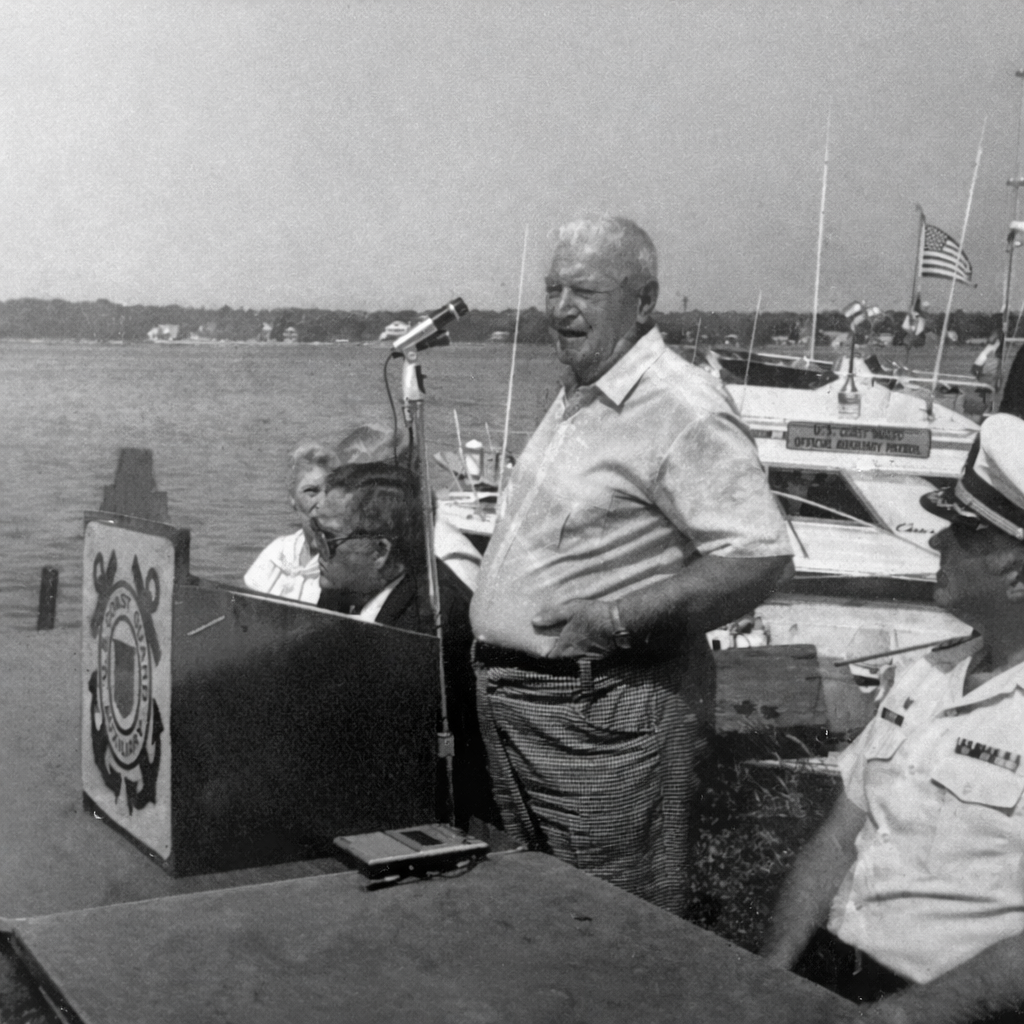
In 1942, Lou Gardella, Dom Lametta, and other Norwalk residents organized Coast Guard Auxiliary Flotilla 72. Their early headquarters were located on the second floor of Lou’s former Sealshipt building. From there, members of the flotilla patrolled local waters and Long Island Sound, protecting the shoreline and remaining on constant watch for suspicious activity.
Flotilla 72 became one of the oldest units in the country and remains an active and essential resource for area boaters today. After the war, it relocated to its current headquarters at Calf Pasture Beach, continuing a legacy that began during one of the most uncertain periods in the region’s history.
The harbor had become home, but the timing would soon change everything.
Up Next: How the End of the War Sparked a New Era for Boating... and for Rex Marine.